

In the manga
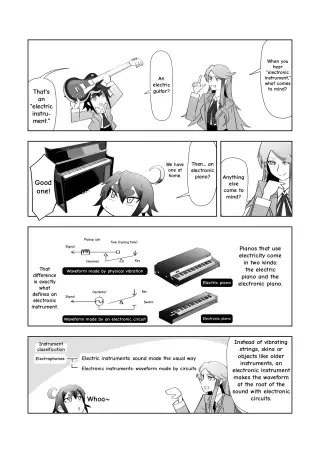
In SIGNAL 1, when Kohaku visits the Electronic Instrument Society’s club room, Ikune-senpai asks her this.

When you hear “electronic instrument,” what comes to mind?

An electric guitar?
That’s an “electric instrument.”
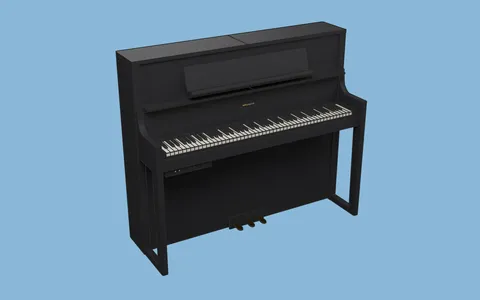
Wrong on the very first try. Next Kohaku answers, “Then… an electronic piano? We have one at home,” and Senpai nods: “Good one!” An electric guitar and an electronic piano both need electricity to make a sound, so what’s the difference?
Where is the sound born?
In the end, an instrument’s sound reaches your ears because a speaker or the instrument’s body shakes the air (LESSON 02). The difference lies one step before that: where the “waveform” at the root of the sound is born.
Electric instrument
Electronic instrument
In an electric guitar, what vibrates is the strings. The pickup under the strings is a magnet wrapped in a coil, and when the steel strings vibrate above it, electricity flows in the coil. The electricity is only there to pick up the vibration and make it bigger. The source of the sound is the strings, just as on an ordinary guitar.
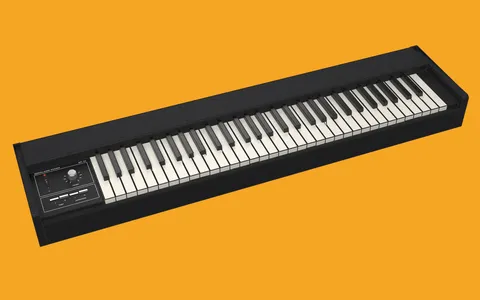
Pianos come in both kinds too. On an electric piano, pressing a key makes a hammer strike a thin metal rod called a tine, and a pickup coil picks up its vibration. On an electronic piano, the key is nothing more than a switch: pressing it makes an electronic circuit called an oscillator create a waveform.
Instead of vibrating strings, skins or objects like older instruments, an electronic instrument makes the waveform at the root of the sound with electronic circuits.
Electric instrument or electronic instrument?
0 / 7 correct
An electric guitar
What vibrates is the strings. The pickups (magnets and coils) turn the strings’ vibration into electricity, and an amp makes it louder.
An electric piano whose hammers strike metal rods
Thin metal rods called tines vibrate, and pickup coils pick that up. It’s the one the manga labels “Waveform made by physical vibration.”
An old electronic piano that makes its sound with oscillators
The keys are switches, and the waveform at the root of the sound comes from oscillators (electronic circuits). Nothing is being made to vibrate.
A modern electronic piano for the home
Most of them play back recordings of a real piano, stored as data, using digital electronic circuits. More on this in LESSON 08 (PCM).
The theremin
The distance between your hands and the antennas changes the pitch and loudness of a wave made by electronic circuits. There are no strings or skins.
Playing a tune with the sound of a spinning motor
What vibrates and makes the sound is the motor itself. In the manga, Senpai answers “I’d call that electric?” too.
The Telharmonium
In the manga it’s “the world’s first electronic instrument.” But its waveforms come from spinning generators, not electronic circuits. Instruments like this are sometimes put in a separate group called “electromechanical.”
Classifying instruments, and “electrophones”
The blackboard in the manga reads “Instrument classification: Electrophones — Electric instruments / Electronic instruments.” The word “electrophone” comes from a way of sorting instruments by what vibrates to make the sound.
In 1914, the musicologists Hornbostel and Sachs sorted the world’s instruments into four families. Later, Sachs himself added a fifth family, the electrophones, which make their sound with electricity.
- IdiophonesThe object itself vibratesXylophone, cymbals, castanets
- MembranophonesA stretched skin vibratesDrums, timpani
- ChordophonesA stretched string vibratesGuitar, violin, piano
- AerophonesThe air itself vibratesFlute, trumpet, pipe organ
- ElectrophonesSound made with electricityElectric instruments Sound made the usual way, with the vibration picked up electricallyElectronic instruments Waveform made by electronic circuits
Books sort instruments that make sound with electricity in different ways. Instruments like the Telharmonium and the Hammond organ, which make an electrical waveform with spinning parts, are sometimes put in their own “electromechanical” group, separate from both electric and electronic instruments. This site follows the way the manga sorts them.
Making sound “with electricity alone”?
After hearing all this, Kohaku tries to sum it up in her own words.
So an electronic instrument makes sound with electricity alone?
Basically, yes!
And right away, Kohaku thinks of a tricky question.
Then if you made sound with a motor, which would it be?
Not as a speaker, I mean. If you vary the voltage to play the motor’s own noise, I’d call that electric?
Senpai adds “not as a speaker” for a reason. A speaker is a part that pushes a diaphragm back and forth with a magnet and a coil, so in how it works, it’s a close cousin of the motor. An electronic instrument also ends by driving a speaker to make sound, but what plays there is a waveform the electronic circuit has already made.
When you play a tune with the sound of a spinning motor (its running noise), on the other hand, you change how fast it spins and make the motor itself hum. The source of the sound is an object vibrating, so it’s closer to an electric instrument. Look at where the waveform is born, not at what moves last, and it gets much easier to tell.
Here Senpai goes on: “The world’s first electronic instrument… made its sound with motors, too!” And she adds, in small letters, “Dynamos, to be exact.” A dynamo is a generator that makes electricity when you turn it. At the end of the 19th century, before electronic circuits existed, the Telharmonium used spinning generators to create the sound’s waveform as electricity. That story is in LESSON 04 (How Electronic Instruments Began).
The charm of electronic instruments: any shape you like
In SIGNAL 3, Senpai digs a theremin out of the club room. Kohaku’s reaction: “Doesn’t look like an instrument at all.”
Not being tied to keys, strings or drumheads, and creating with any interface you like: that’s part of the charm of electronic instruments.
On an ordinary instrument, the way it makes sound and the way you play it can’t be separated. It has strings, so you pluck them; it has a tube, so you blow into it. On an electronic instrument, the circuit that makes the sound and the part a person touches (the interface) are joined only by wires. So the part you touch can take any shape at all.
- You play the theremin without touching it, moving your hands toward and away from its antennas.
- The Ondes Martenot can be played by wearing a ring and sliding a wire left and right.
- A drum machine plays by itself once you lay out “where to play” on its glowing buttons.
- Even on a keyboard electronic instrument, the keyboard is just a row of switches, so you can play it from another instrument over a cable.
This ability to “separate the circuit from the controls” leads to the sequencer (LESSON 09) and MIDI (LESSON 10) in later lessons.
Summary
- An electric instrument picks up the vibration of strings and the like with electricity and makes it louder. The source of the sound is a vibrating object.
- An electronic instrument makes the waveform at the root of its sound with electronic circuits. The keys and so on are switches.
- When in doubt, look at “where the waveform is born.”
- Because the circuit and the controls are separate, an electronic instrument can take any shape.
Where this series goes
If an electronic instrument is “an instrument that makes its waveform with a circuit,” the next thing to ask is “what waveform gives what sound?” LESSONS 02–03 look at sound itself, 04 at the first electronic instruments, 05–07 at how synthesizers make sounds, and 08–10 at recording, automatic playing and instruments talking to each other. Every lesson starts from an explanation that Ikune-senpai and the others give in the manga (like the one on SIGNAL1 p.13).